What's The Difference Between Resin and Concrete for Driveways?
What is the optimal choice for a driveway surface? Resin or concrete?
Concrete and resin-bound driveways are two common choices in Andover and the surrounding area when the time comes to upgrade to a new driveway. In both instances, longevity is assured; however, what additional factors may influence the decision-making process? The following guide elucidates the fundamental distinctions, advantages, and disadvantages of each material, enabling you to select the one that is most appropriate for your property.
Visual Aspect
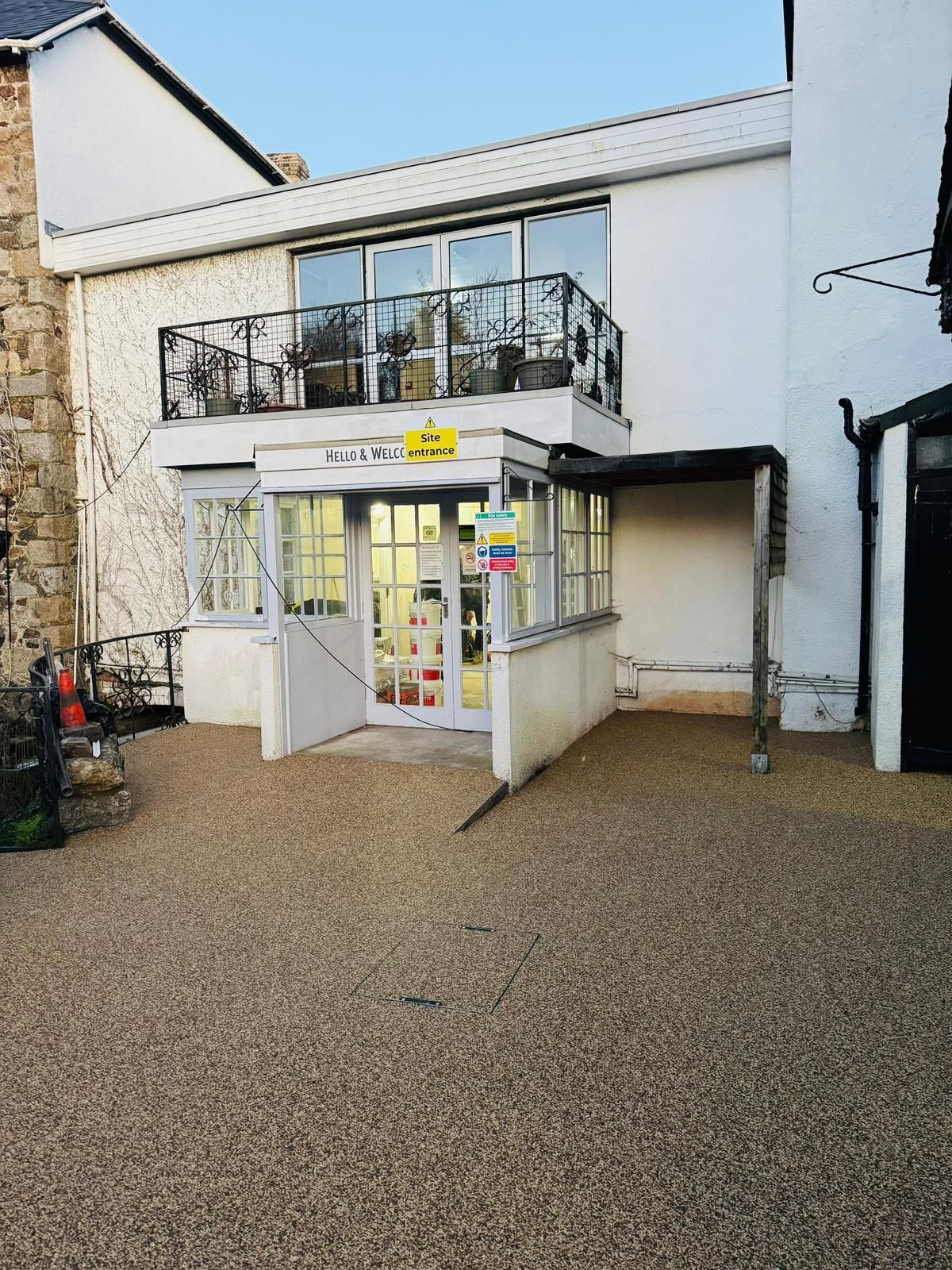
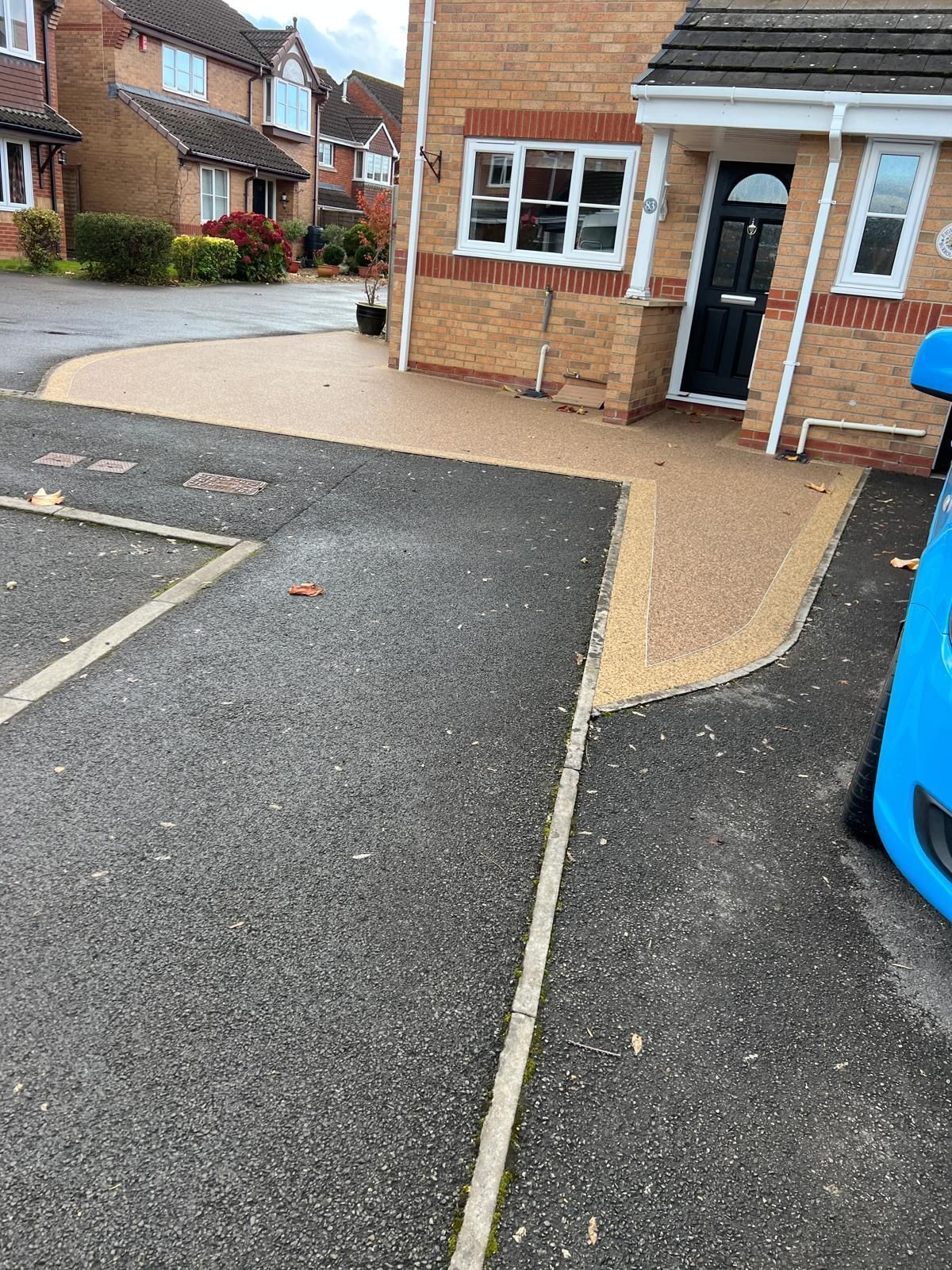
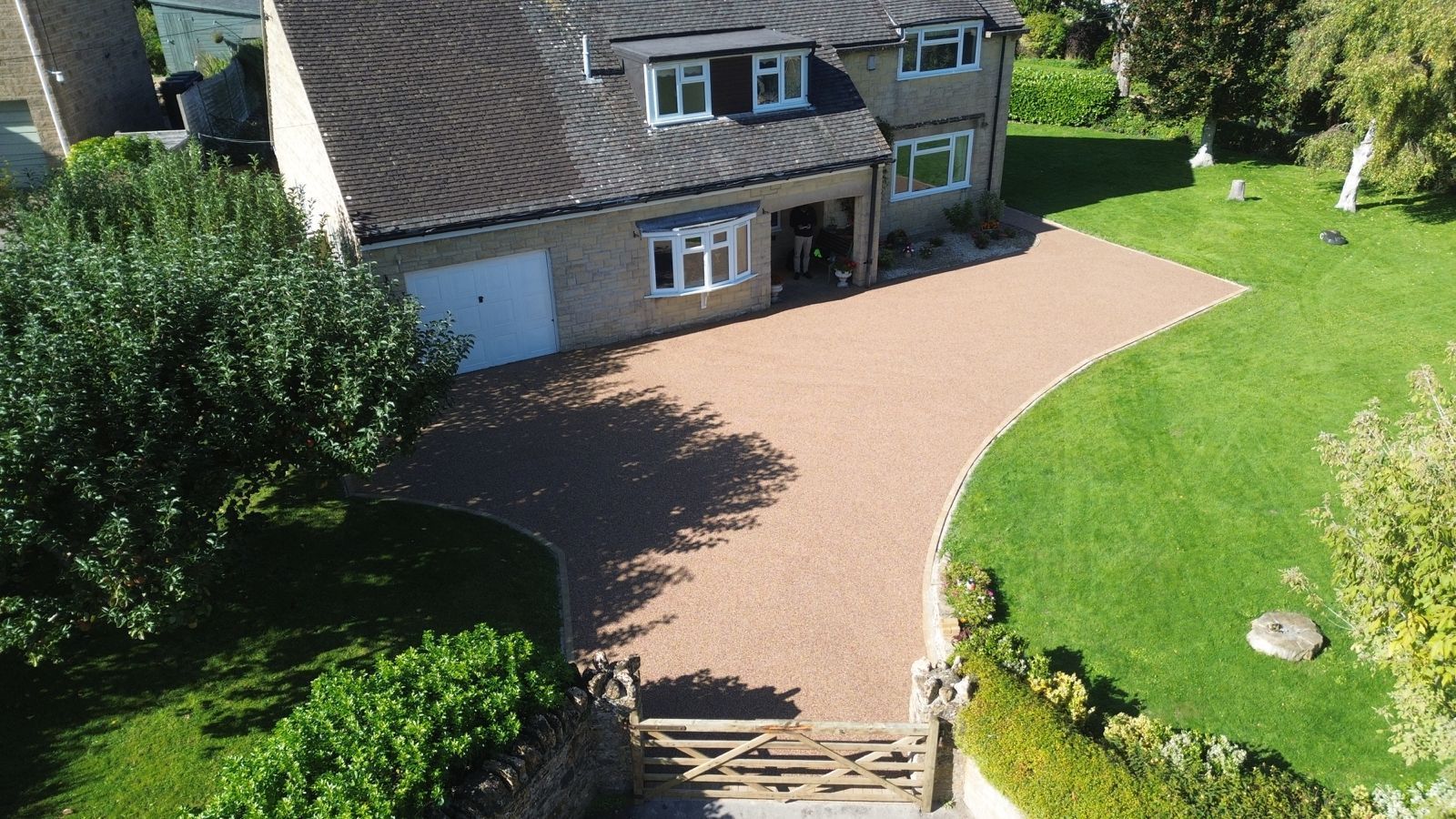
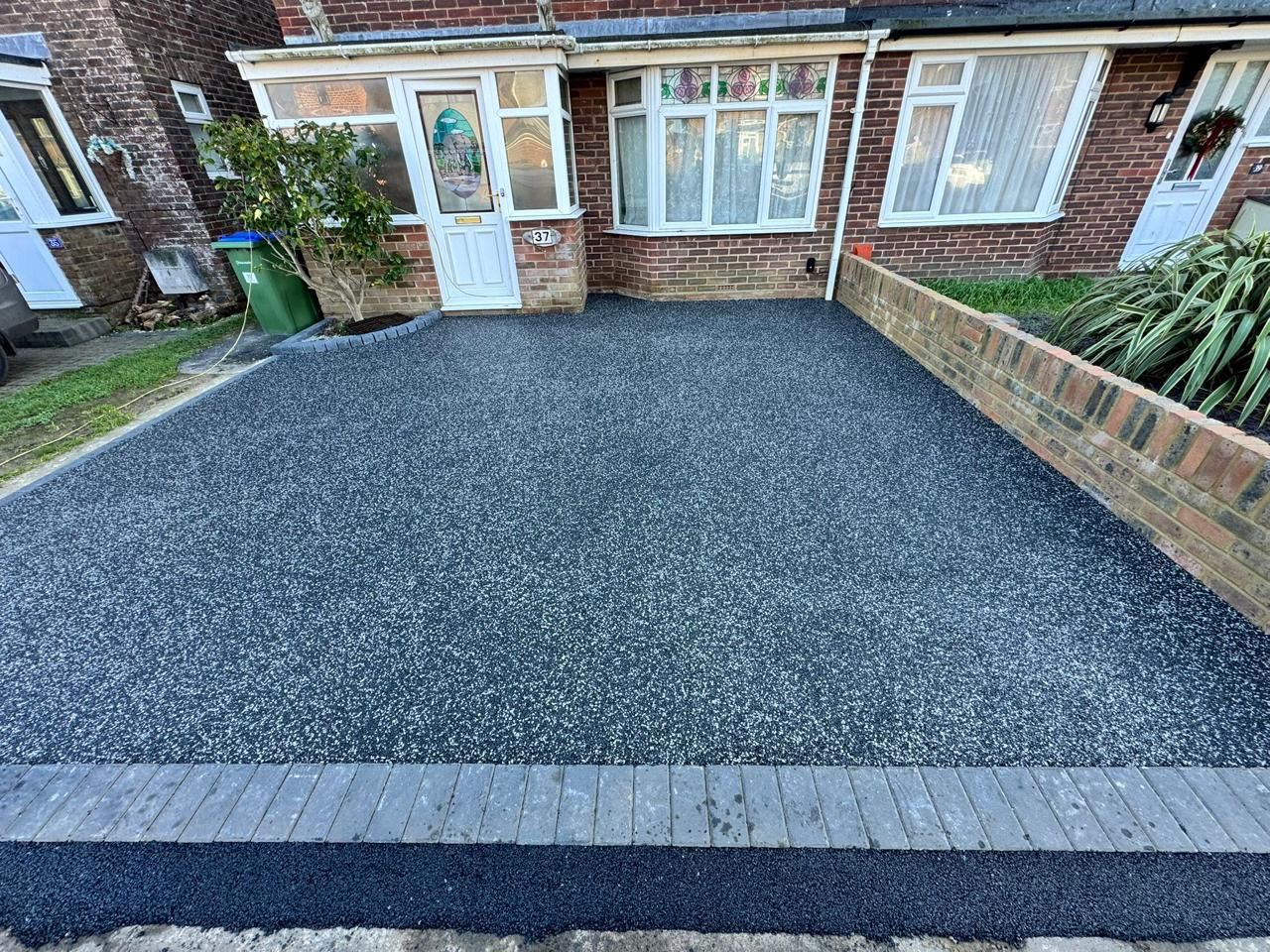
The second image below illustrates that resin provides a smooth and seamless finish, with a plethora of natural stone colours available. A customized design can be developed for either modern or classic properties, with a colour available to complement any property.
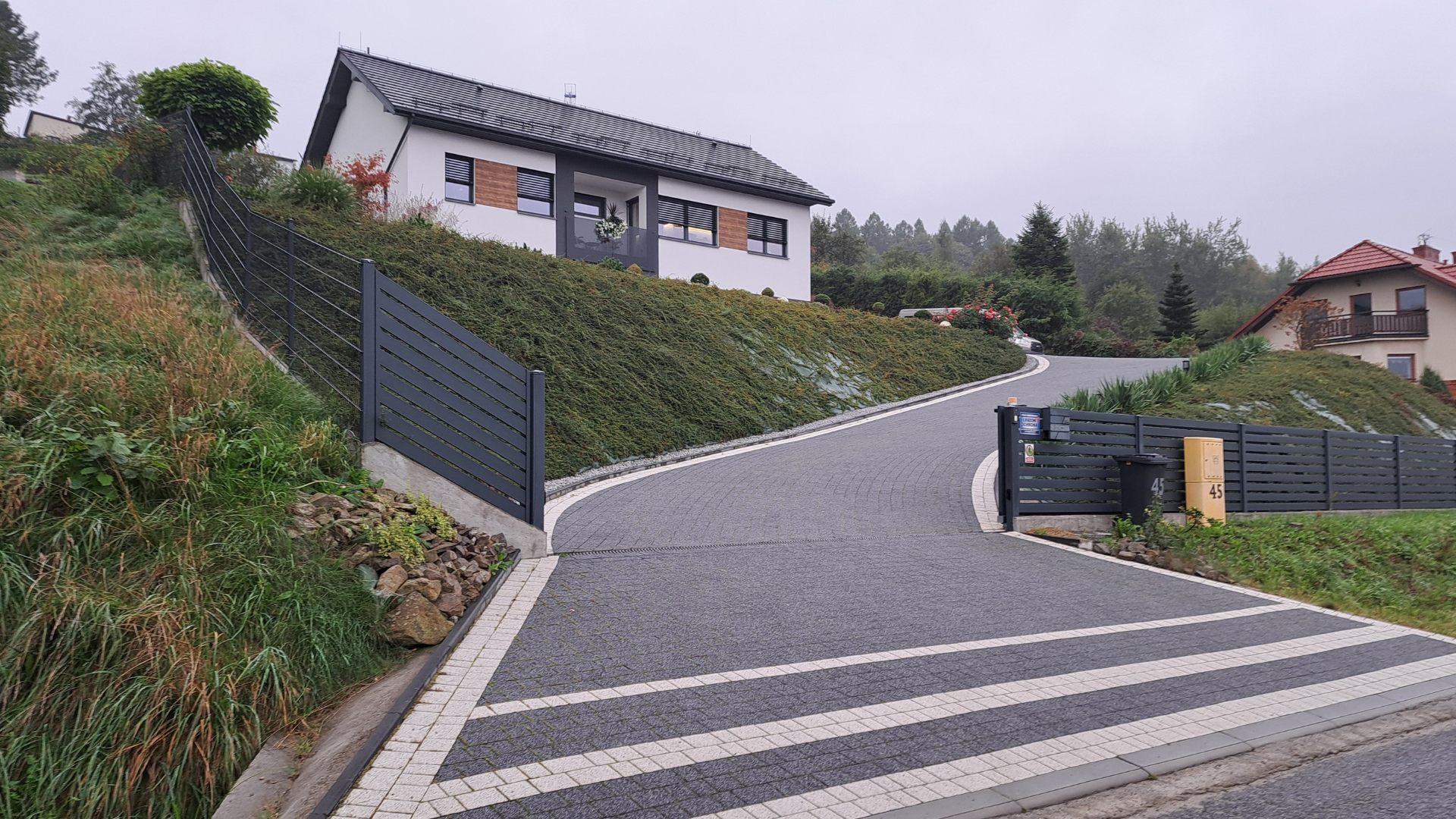
The initial image below demonstrates that concrete produces a polished and pristine appearance. The colours and "stamp" patterns are modifiable, though the range of variation is limited in comparison to resin.
Who is the recipient of the visual aspect award? Resin, consistently. The possibilities are limitless and can accommodate any property type.
Duration of life
Concrete is an exceptionally robust material capable of supporting substantial loads. Nevertheless, it is the most susceptible surface to cracking during weather fluctuations. Repairs become conspicuous when cracking occurs.
When correctly installed, resin exhibits exceptional durability. It possesses significant flexibility, allowing it to withstand ground movement more effectively than alternative driveway materials and reducing its susceptibility to cracking. Resin is optimal for any surface subjected to vehicular traffic.
Drainage Proficiencies
Resin bound surfacing is the most permeable option for a driveway. Water drains instantaneously. This indicates the absence of puddling, diminished flood risks, and complete compliance with Sustainable Urban Drainage Systems (SUDS). Furthermore, the installation of resin at a property does not necessitate planning permission due to its drainage properties.
Concrete is entirely impermeable and ineffective for water management. Water will accumulate on the driveway unless drainage channels and slopes are properly installed. This additionally results in water run-off and heightens flood risks.
Resin is unequivocally the superior choice for drainage, as it is specifically engineered for that purpose.
Comparison of Resin and Concrete Costs
Concrete demonstrates superior cost-effectiveness, being approximately 20-40% less expensive to install than resin, contingent upon size and specifications. Due to the multiple advantages of resin outlined in this guide, its installation is consequently more costly. Nevertheless, over time, the cumulative maintenance expenses associated with concrete may ultimately balance the initial costs.
Maintenance Specifications
Resin requires minimal maintenance, necessitating only occasional sweeping and perhaps an annual jet wash. It is impervious to weeds, discolouration, and does not necessitate sealing. The permeable characteristics of resin facilitate the prevention of debris accumulation on the driveway.
Concrete requires minimal maintenance during the initial years. Subsequently, it may begin to deteriorate and possibly fracture. It can also become quite slippery in winter as it begins to deteriorate. In this context, sealing is necessary to maintain the functionality and appearance of concrete, typically every two years, with costs ranging from £500 to £2,000.
What is the duration of the installation process?
The installation durations are quite comparable. In the context of a comprehensive excavation project, the procedure is notably analogous: excavate the designated area to the specified depth, eliminate all debris, construct the base and sub-base, and install the final surface.
Depending on the project, the installation of resin or concrete may require between 3 and 7 days for completion, applicable to most residential undertakings.
Additionally, both materials necessitate several days prior to the utilization of vehicles.
Which surface is optimal overall?
The guide indicates that resin offers greater advantages than concrete. Nevertheless, if your budget is constrained, saving 20-40% can be significant. Ultimately, it is primarily a matter of expense. For a durable, aesthetically superior, and genuinely maintenance-free product, resin is unequivocally the superior choice.
Nevertheless, certain customers favour the aesthetic of concrete and are willing to incur maintenance costs periodically. Under those circumstances, opting for concrete would be more logical.
You might also like
Resin Driveways Bristol